asakiyume: (Em reading)
Thanks to [personal profile] osprey_archer's Newbery project, I got out The Flying Winged Girl of Knossos (thanks for catching that [personal profile] light_of_summer!) originally published in 1933 and reissued in 2017 by Betsy Bird, who's served on the Newbery Committee, reviewed books for Kirkus, blogs about children's literature, and has in fact written her own middle grade novel (Long Road to the Circus --I haven't read it).

It's easy to see why Betsy Bird and [personal profile] osprey_archer loved this story: it's great fun and excellently told. I loved it too. The author (Allena Best, writing under the pseudonym Erick Berry) was entranced with ancient Minoan culture, and that love shines through on every page. And in Inas, the daughter of Daidalos (she's genderswapped Icarus for Inas), she's got a great heroine. Who dives skillfully for sponges? Inas does! Who is the best bull vaulter? Inas is! Whose hang glider experiment leads to realization that flying into the wind works better than flying with it? Again, Inas!

The authorial voice is definitely not contemporary, but it's lively and fresh. Every now and then there's something about people's races or features that's winceworthy, but mainly the 1930s-ness of it wasn't intrusive in a negative way.

Tangentially, I loved this description of archaeologists, from the author's introduction: "Then in our own time came the archaeologists, those magicians who build authentic history out of lowly potsherds." Magician archaeologists.

I also read a hilarious short story about the foiling of a racist: "Supply and Demand," by [personal profile] f0rrest. Why yes, his user name is my IRL last name, but we are not related in any way. We stumbled upon each other quite by chance.

In "Supply and Demand" a pushy racist is hoisted by his own petard, his petard in this case being his successful participation in capitalism: he ends up supporting and promoting what he despises. I loved the hapless narrator (a young employee at a big-box home goods store) and the digs at retail training scripts. I will also offer a content warning, though, because the racist dude says alllllll the negative things you can think to say about "those people," as he calls them. There are no slurs, and he never specifies exactly who comprises "those people," but you may not feel like imbibing his nonsense, even if it's to see him taken down. His vituperations are pretty hilarious though, e.g, his rant about the historical Santa Claus (and later, his praise of Santa Claus as a hard worker up there at the North Pole).

Anyway, if you want to see a racist taken down in an unusual way, give it a try. It's about 7,000 words.
asakiyume: (yaksa)
I have a flash story in the current issue of Not One of Us, and what a great issue to be in! I'm sharing the table of contents with Patricia Russo, Sonya Taaffe, and Jeannelle Ferreira--all writers I've loved for a long time--along with Devan Barlow, whose work I've only gotten to know recently, but I enjoy, and others whose work is totally new to me but whose literary acquaintance I'm pleased to make, like Zary Fekete.

Let me share a little (and then a lot!) about my own story first, and then some about the other contributions. Mine is called "The Moon in His Eyes," about a young woman who marries a water buffalo, only to fall in love with the moon on her wedding night. Curious about what happens? Well, you can buy a copy of Not One of Us here.

... or, if you don't mind being read to... I read it aloud here. It's literally just me sitting in my study reading into my desktop computer's camera and microphone all in a single take because I know nothing of video editing and am much too lazy, at present, to learn.

And now let me say a few words about the rest of the zine.

I really enjoyed this issue! )


So yeah! Get your hands on a copy of the zine here, and listen to me read "The Moon in His Eyes" here. ;-)
asakiyume: (Em reading)
Ah, four good things on the docket right now, two of which were recommended to me by other people.

1. Journey, by Joyce Carol Thomas

I was intrigued by [personal profile] rachelmanija's write up, and when I said so, she said, "You specifically would enjoy it." And I DO. The language is gorgeous, and the story moves along. Rachel quotes the final line of a sermon in her post, but man, that entire sermon! Here's more from it:
"Death dealing is the devil's duty.

"The devil's still swishing his long reptilian tail, hooding his ruby snake eyes, walking up and down seeing who he can devour, strewing banana peels on the steep path of life trying to see who he can trick into slipping. Be aware!

"Carry a light in your heart. Some of you're already shining like neon. Don't even need batteries;** you've got everything you require to keep the light going."

2. The Apothecary Diaries, vol 1, by Natsu Huuga, trans. Kevin Steinbach

My first-ever light novel! I got into it because of reading really intriguing fanfic of it on Mastodon; I loved the intelligent MaoMao in the fanfic, and lo and behold, the actual character is equally intelligent. Pressed into service as a poison taster to an imperial consort, she uses her knowledge of medicine to solve mysteries ... appears to be how it'll go. So far she has correctly diagnosed that it was the lead-containing face paint that was causing mysterious illnesses among some of the consorts and killing off their babies (who weren't wearing the face paint but were exposed to it via their mothers). Apparently there's also an anime.

3. Saint Death's Daughter, by C.S.E. Cooney

Continues to be just a breathtaking tour de force.
The twelfth and most abject of the Quadoni apologies was the truest word Lanie had ever spoken. It could be no louder than a breath; it was that fragile ...

All three sounds hung in the air, and together created a fourth sound, an overtone that hovered so delicately, so tremendously, over them all.

And burst.

And rained down such music that all their voices fell silent.

4. The Book of Questions, by Pablo Neruda, bilingual edition with both the Spanish and translations by William O'Daly

I became interested in this from going to an exhibition on endpaper art at the Eric Carle Museum of Picture Book Art that featured endpapers from a picture book version of this featuring only some of the questions.

The questions come in fours that form a poem. Sometimes one question in the poem stands out to me; sometimes the effect of the overall poem is what does it. Here's one where I love the overall poem, but especially the second question:

Do salt and sugar work
to build a white tower?

Is it true that in an anthill
dreams are a duty?

Do you know what the earth
meditates upon in autumn?

(Why not give a medal
to the first golden leaf?)

~ ~ ~

Trabajan la sal y el azúcar
construyendo una torre blanca?

Es verdad que en el hormiguero
los sueños son obligatorios?

Sabes qué meditaciones
rumia la tierra en el otoño?

(Por qué no dar una medalla
a la priemera hoja de oro?)


I haven't read them all but I see repeated words, themes--bees, lemons, yellow, tears, clouds ... I love it. I think creating a concordance could be a meditative thing to do.

**Queue Sia: "Unstoppable" 🎶I'm so powerful, don't need batteries to play🎶
asakiyume: (Em reading)
Look at this! Posting about books I've read or am reading on an actual Wednesday. Wohoo, winning!


The Lincoln Highway )

Saint Death's Daughter )

The Tail of Emily Windsnap )
asakiyume: (yaksa)
It's a cold, surreal post-apocalyptic world, plagued by meteor showers, crumbling apartments patrolled by tigers, one where former tar-spreading technicians repurpose themselves as morning soup sellers. Bobby is wakened by a knocking at his door. He doesn't open it, but he's told, through the closed door, that Belle-Medusa, an immensely huge jellyfish, needs his help. Belle-Medusa has a library of scents in her memory, but they're mainly ocean scents. She wants Bobby to collect and convey land scents to her:
In truth, she only had one passion anymore: she collected smells. Aromas, perfumes, whiffs, and scents of all types. She numbered them and she put them in tiny special cases in her memory, in a classification system that nobody, apart from herself, was able to understand.

For this purpose, Belle-Medusa has already "plugged into" Bobby. There are various ways he can convey the scents to her, but the way he settles on is to plunge his face into water and speak them.
I had my cheek pressed against the windowpane. Just under my nose, fed by the steam that escaped from my mouth, the frost drew branching ice wisps, which imprisoned the dust. If I had had to specify the smell that lingered on the surface of the glass, I would have spoken of a dusty ice floe, of frozen goose down, of dark sherbet. Wait, I thought, maybe I could send that to Belle-Medusa, in order to check that the communication between us is well established.

I left my observation post. I groped my way to the bathroom and I filled the sink with what flowed from the faucet, water that carried with it cubes and needles of ice. Before immersing my face, I had to stir it with my hand so as not to use the end of my nose to break the film threatening to form ... I sank my head into it to my ears.

"It's me, Belle-Medusa," I said.

Heh, this got long. Let's put in a cut. )

It's a strange and wonderful story, and I recommend it. I read it in an anthology called XO Orpheus: Fifty New Myths, edited by Kate Bernheimer and published in 2013. The anthology was lent to me by a friend who had picked out that story especially for me to read because (I'm flattered to say), they said it reminded me of the story of mine they'd read--and also, I suspect, because the story's important to them: it's entered their vocabulary. They talk about their scent library. The other stories in the collection look promising too; while I'm borrowing the book, I think I'll read some more.

It also exists as a 64-page standalone publication, but only in its original French, as Belle-Méduse. For the anthology, the translation was done by Sarah and Brian Evenson.

*Manuela Draeger is a fictitious author, a librarian whose stories are intended as distraction for children in containment camps. The author of her world is Antoine Volodine ... which is in turn a pen name of the writer Jean Desvignes.
asakiyume: (Iowa Girl)
I am loving Saint Death's Daughter, by C. S. E. Cooney, with a powerful love and a deep wonder. No description I encountered of the book before starting it comes anywhere near doing it justice, including the author's own, so I'm not going to try. Instead I'll tell you about its effect on me and some of the things it's done so far. (I'm a little more than a third of the way through the story.)

I was enjoying from the start its humor, both in language and in in-story encounters, and its tenderness and darkness, and how deftly and quickly I knew and loved the characters--there were some dramatic moments, some regrets for the main character, Lanie Stones, and some sweet successes--and THEN there was a tremendously dramatic moment, and I realized I was experiencing the story with the sort of bated breath and tenterhooks feeling that I haven't had since childhood. In that moment there were several swooping twists and turns that I totally didn't expect, and yet they were completely right and justified, if you know what I mean. They had been prepared for, but I hadn't noticed the gears and scaffolding of the preparation, not because I wasn't reading closely but because it had been in beautiful plain sight all along, and I'd been admiring it for other reasons. As if the painting on the wall of a woman with a sword is actually a woman with a sword--I didn't notice! But of course!

To be transported like that by a story, it's like flying.

But it's not plot magic for just for plot magic's sake, there's profound stuff going on too, about different understandings of love and everything it can shade into, and about regret/remorse/recompense, and about children and adults, but none of that stuff is blared out like an object lesson; it's not a burden the story's carrying-it's all just part of the weave.

Have some wonderful lines.

Here, a terrifying character observes her beloved:

Nita’s gaze tracked the gyration, a terrifying tenderness colonizing her face.

Here, a conversational gambit typical of children:

“Why not?” repeated her remorseless niece now. Datu was entirely capable of repeating those same two words for the rest of the night.

Here, curiosity described in a way that lingers:

“And what is it,” breathed the Blackbird Bride, her colorless eyes brilliant with calamitous curiosity, “that you ask?”

Here, a father (Mak) saying to his young daughter that choices have consequences:

“Mumyu is not here,” said Mak flatly. “Mumyu made her own choices, and her choices found her out. We are here. You and I and your aunt and the Elif Doéden. We are all here together in this place. We are in great danger. We must trust and respect each other. We must treat each other as allies.

Anyway--thoroughly enjoying it. And the sequel, Saint Death's Herald, comes out next month!
asakiyume: (feathers on the line)
This flash tale is about hope in a world of hot rain and ashes. Hope in a cold bucket. Hope actuated by a bright, sharp trowel. A waitful silence.

And Mena’s walking faster than I would have thought she could. The soles of her shoes glint silver in the gray afternoon light.

It's about Billy Behind Me. Look after him, Mena says. But when he touches the narrator's hand, we can feel it's a mutual looking after.

Mena, Until, by Patricia Russo
asakiyume: (cloud snow)
[personal profile] sovay linked me to a story from 2012, "Aquatica," by MC Clark, in which a male anglerfish's effort to avoid his own biological drive and the blandishments of a female anglerfish lead to profound conversations. Really gripping story that creates a full, meaningful vision of the anglerfish life cycle--which is one of those life cycles that seems really alien from a mammalian point of view. It's easy to sympathize with the male anglerfish's desire to outrun biological determinism, but it's not merely survival he's after--as the female anglerfish points out, death comes either way--it's wanting to perceive or understand something more than just the cycle.

* * *


On the way to visit my dad on Christmas Day a small murmuration passed over our car. It was breathtaking--thinking about it makes me stop breathing. Dark bodies, wings, pale sky--a tessellating collectivity. Then on our way back later in the day, we saw bobcats in a meadow. Bobcats are so strange, if you're used to domestic cats: they're like someone has taken a domestic cat and given it extra-strong, extra muscular legs... and reduced its tail.

* * *


Saw this and wasn't sure at first whether it was a branch on the path or the shadow of a branch.

shadow or branch

(It was a shadow)
asakiyume: (Em reading)
I'm reading too many things to do them all justice, and then interrupting them with other things, but the things I've spent most time with are

--More of Life Is Not Useful, by Ailton Krenak. The first essay was good; I felt more at sea in the second and now the third--I can't quite follow the logic of where he goes all the time, and sometimes there are jargonish phrases that I don't get. Even so, there are moments I like very much.

This, for instance, is both serious but also amusingly expressed:
We can inhabit this planet, but we will have to do so otherwise. If we don’t take steps in this direction, it would be as if someone wanted to get to the highest peak of the Himalayas but wanted to take along their house, their fridge, their dog, their parrot, their bicycle. They’ll never arrive with heavy luggage like that. We will have to radically reconceive of ourselves to be here. And we yearn for this newness.

And this I love:
There are people who were fish, there are people who were trees before imagining themselves as human. We were all something else before becoming people.

--I also have been reading Eagle Drums, by Nasuġraq Rainey Hopson, a story of an Iñupiaq boy who's compelled to live with eagles to learn what they want to teach if he wants to stay alive. I got this one from the library based on what [personal profile] osprey_archer wrote in this entry, specifically, that it "is built on axioms about how the world works that are vastly different than the ones structuring most modern fiction." She's right! And I'm enjoying that very much.

--I started reading C.S.E. Cooney's Saint Death's Daughter-- I love CSE Cooney's writing so much! I just hope I can maintain momentum on it, because it's long, and somehow I don't apportion as much time to reading as I could (which is a terrible thing for someone who writes to confess to).

Meanwhile, here are some things that I want to read (or have read and want to call attention to):

Aster Glenn Gray's Deck the Halls with Secret Agents. Long-time rival Soviet and US agents meet at a Christmas party! I wonder what happens next ;-)

Iona Datt Sharma's Blood Sweat Glitter --Sapphic romance around roller derby!

This one came to me as a recommendation on Mastodon, and since I follow the author on social media but have never read anything by her, I'm very excited! It's also a podcast--not sure if I will listen or read it: "The Font of Liberty" by Elizabeth Porter Birdsall.

And then there's Kerygma in Waltz Time, which I've read and would recommend to fans of story retellings, fan fiction, and falling into stories--it's by Sherwood Smith, originally published under a pseudonym in It Happened at the Ball, an anthology of ballroom stories.
asakiyume: (feathers on the line)
I'm in this issue of Not One of Us with a piece of very short flash fiction, "Freeing .33333..."

It's ironic, maybe, to write flash about a number that goes on forever, but like the narrator, I've always been fascinated by this endlessly repeating number, and a short form is as good as a long form, I suppose, to talk about something infinite.

There are several other offerings in this issue that I loved--noteworthy among them [personal profile] sovay's poem "Fair Exchange," about what the dead want. (You know it instinctively, but Sovay expresses it--and what the dead would pay to get it--with wrenching clarity.)

The poem "Catch the Bus," by Zhihua Wang, is light, humorous--but its theme is about trying to fit yourself in to a schedule where *you* are the piece that has to change; *you* are the one that must adapt, and that's also a theme in the story "Loneliness and Other Looming Things," by Devan Barlow, whose protagonist is psychologically incapable of tolerating an "upgrade" that everyone around her has made or is making. Like someone with a rotary-dial landline phone in the era of smartphones, she's isolated, but the solution being proposed may cost her her only human connection. There's beautiful language on dreams in this story:
There was a oconstant bristle at the edge of my mind, like I had to remember to tell someone something ... At random points throughout the day, I started laughing, as if I remembered something funny. But I never had any idea what the joke was.

In "A Million Wings Moving as One," by Jay Kang Romanus, a changeling who can take and shed an infinite number of forms tries to find a sense of self. These lines struck me:
Outside, the humans drift under its window in an endless river. The changeling watches them, envying their lack of choice.

The poem "Protest" by Rebekah Postupak achieves a giddy-but-grim change of perspective for both the narrator and the reader--powerful!

The remaining two stories, "The World Has Turned a Thousand Times" by CL Hellisen and "Where Dead Men Come to Die" by Ed Teja, have startlingly contrasting settings--the stark semi-desert of South Africa's Karoo region in Hellisen's tale and the tropical humidity of the town of Koh Kong, in Cambodia's Koh Kong Province, in Teja's. Both are stories of transformations of sorts, and self-discovery.

Not One of Us is that remarkable thing in this digital world, a paper zine. Some of my favorite writers, like Patricia Russo and my dad, have published in its pages. Information on buying single issues or subscriptions and on submitting to it is available HERE.

asakiyume: (squirrel eye star)
Quick! Before the day closes.

"Where Oaken Hearts Do Gather," by Sarah Pinsker (Uncanny March–April 2021)

I came to this via [personal profile] purlewe (thank you!) It's done as posts on LyricSplainer, a site for talking about folksongs--in this case, the folksong "Where Oaken Hearts Do Gather," which has many variants (of course), across all of which a man's literal heart is taken out and replaced with an acorn... Dr. Rydell wrote a paper about it back in 2002 and posted more about it on his blog, was even investigating a town that might have been the site of the original story ... but then he seems to have disappeared from the world of scholarship and the interwebs. So reports Henry Martyn, one of the commenters on LyricSplainer, who is following in Dr. Rydell's footsteps ... though one of the other commenters remarks that Henry Martyn's own last post to the site seems to have been a couple of years ago...

I enjoyed all the fun ballad-adjacent handles the LyricSplainer site users had, like Rhiannononymous, BarrowBoy, and BonnieLass67. Also, the author Sarah Pinsker is also a singer-songwriter, and among the links to [fictional] versions of "Where Oaken Hearts Do Gather" by groups like Steeleye Span and the Decemberists, there's one actual live link to a version by a group called Moby K. Dick. Nice touch, Ms. Pinsker. If you enjoy folksongs and all the paraphernalia surrounding them, this is a story for you. All you folks who were reviewing Ellis Peter’s Black is the Colour of My True-Love’s Heart, if you haven't read this already, give it a try!

"Letters From Mt. Monroe Elementary, Third Grade," by Sarah Pauling (Diabolical Plots 3 September 2024)

Beginning in 1967, "a mere five years after Beacon Day," when Earth first received notice that a generation ship was heading its way from a faraway star, kids in an elementary school in Michigan have been writing letters to the Pilgrims, as the aliens are known. The letters extend to 2024 (the Pilgrims aren't due to arrive until 2090), and it's funny and touching to see the various preoccupations and stances of the children over time--also fun to see younger siblings appearing. One third-grader from 1967 later becomes the class teacher. One child describes a book she found in her mom's car that features a romance between a Pilgrim and a woman whose evil husband is trying to take over her ranch:
she was out riding her horse and when they started kissing all the rain turned into space diamonds that let them read each other’s minds. Do you think that will happen a lot when you get here?

But maybe most touching of all is the fact that in spite of the suspiciousness of some of the kids' letters, the framing of the story is such that we understand the coming of this generation ship has NOT been met with an all-out scramble of military preparedness. The assertion, never directly articulated, that we might--just possibly--welcome an alien generation ship is a beautiful statement of faith in humanity.

"A Theory of Missing Affections," by Renan Bernardo (Clarkesworld, September 2024)

Vanessa Fogg put me onto this story when she described it as a "fascinating story that considers big questions and ideas." The author describes it as "a tale about two sisters separated by distance, by their conflicting views on life, and by the devices left by an extinct alien species." One sister is into scientific investigation of the aliens; the other is an adherent of a religion that worships them as gods. The story is told from the first sister's perspective, and I confess I was waiting with bated irritation to see what was going to happen. But the author neatly dodged a facile ending, coming up with one that was emotionally satisfying. Similarly, the extinct aliens, who we're initially told "cherished torture" evolve in our consciousness as the viewpoint sister comes to understand them better. It's a carefully built story--nicely done.
asakiyume: (glowing grass)
Patricia Russo writes weird, wonderful things, full of heart. "The Placeholder" is a flash piece about planting a stray seed.

I love it on its own merits, and what it's saying isn't the same as what "Semper Vivens" is saying, but there are some harmonies:
What his heart wanted was to lick the leaf that was touching his lip and then bite it, chew it slowly, taste it thoroughly, swallow it, and then the next one on the stem, and the next. Even if they tasted bad. Even if they made him sick. Even if they transformed him in a way he didn’t, not yet, entirely want.

There are all kinds of other lovelinesses in this story though--the curl of your body around a cat, half-remembered lullabies--and this story is short and free to read. Enjoy!
asakiyume: (Em reading)
I finished Rebecca Fraimow's Lady Eve's Last Con, which was rollicking good fun from cover to cover. A couple more quotes (nonspoilery) from further on in the story:

"I’d given her plenty of time to put me back in my place; she’d be faster on the draw next time around. It’s a bad habit to let yourself get caught tongue-tied. Life’s too short for should-have-saids." (51% in)

"I stuck my chin up, and tried to look like a person who was trying to look brave." (91% in)

I got one hilarious surprise, which was that one firm prediction I'd had since the very beginning ... didn't come true. All along I'd been congratulating Rebecca on treading a very difficult line to just about allow it to be possible--and then it didn't happen. I was so sure of my prediction that I had a hard time believing the evidence on the page, and then when I'd absorbed the fact, it threw what I'd seen as delicate treading into a whole other light (of the "No, actually it's quite simple: the obvious judgment is the correct one" variety). The way the story played out in reality makes for more satisfying storytelling, I think, and allows for more nuance and growth for one character, so I was pleased with it. It just took a moment of mental rearranging for me to get there (and I was retroactively a little ashamed of my prediction).

My morning morsel of Robin Wall Kimmerer's Braiding Sweetgrass brought a reflection on strawberries:
In a way, I was raised by strawberries, fields of them. Not to exclude the maples, hemlocks, white pines, goldenrod, asters, violets, and mosses of upstate New York, but it was the wild strawberries, beneath dewy leaves on an almost-summer morning, who gave me my sense of the world, my place in it.

I grew up in upstate New York too. For me it was the black raspberries of early July. Being with them was my everything.

Robin Wall Kimmerer went on to talk about how the nature of a thing can change depending on how it comes to us:
It's funny how the nature of an object--let's say a strawberry or a pair of socks--is so changed by the way it has come into your hands, as a gift or as a commodity. The pair of wool socks that I buy at the store ... I might feel grateful for the sheep that made the wool and the worker who ran the knitting machine ... But I have no inherent obligation to those socks as a commodity, as private property ... But what if those very same socks ... were knitted by my grandmother and given to me as a gift? That changes everything. A gift creates ongoing relationship. I will write a thank-you note. I will take good care of them and if I am a very gracious grandchild I'll wear them when she visits even if I don't like them. When it's her birthday, I will surely make her a gift in return ... Wild strawberries fit the definition of gift, but grocery store berries do not.

Continuing to work my way through Why Didn't You Just Leave, edited by Julia Rios and Nadia Bulkin. As usual with an anthology, some stories strike my fancy more than others.
asakiyume: (Em reading)
I have so many saved up for this! And I'm actually writing on a Wednesday. Wohoo, win condition!

What I've just finished

A Family of Dreamers, by Samantha Nock. [personal profile] radiantfracture put me onto this collection by quoting one of the poems. Samantha Nock is an indigenous poet, and her poems reflect that heritage, but also explore family relations, love, self doubt--you know: the stuff we write poetry about.

Some quotes )

* * *

Ideias Para Adiar O Fim Do Mundo, by Ailton Krenak
This has also been translated into English (Ideas for Postponing the End of the World). Ailton Krenak is an indigenous activist from Brazil, of the Krenak people, and this very short book collects talks that he's given, including the title one. He's very, very good at reminding his listeners that there's more than one way of understanding things, more than one way of approaching problems, and that for some people, the end of the world has been happening for a long, long time. (My Goodreads review has quotes that give a feel for it)

* * *

Besty and Tacy Go over the Big Hill, by Maud Hart Lovelace
They do, and they discover a community of Syrian refugees. The more things change...

This story mulls over kings and queens in lots of different ways. Early on the girls write a letter to Alfonso XIII, who upon turning sixteen has become king of Spain. The girls tell him that they'd love to marry him but realize that, sadly, they can't, since they're not of royal blood (also they're only ten, but they don't mention that), but that nevertheless they wish him the best. And then at the end of the story they get a letter back from the royal secretary, telling them the king appreciates their thoughts! And I was thinking how much smaller the world was then--that girls could write a letter to the royal palace in Madrid, and that a palace secretary would actually answer! ... Well, assuming that that incident is based on something that actually happened in MHL's life--it might not be. But it's conceivably possible. Alfonso XIII came into his majority in 1902. Wikipedia tells me that in 1900, the human population was a much more intimate 1.6 billion. Not like our current 8 billion. Palace secretaries could write to little girls in Minnesota!

What I'm reading now

Braiding Sweetgrass, by Robin Wall Kimmerer. My approach to this has been very roundabout. I'm not a big fan of long books of serious essays, even when I should like them. So I started by just dipping in. But it's won me over, so I'm going to read it straight through.

* * *

Why Didn't You Just Leave, edited by Julia Rios and Nadia Bulkin. A collection of horror stories that answer the question of why people don't just leave the haunted place they're in. Excellent so far.

* * *

Lady Eve's Last Con, by Rebecca Fraimow. A rom-con romcom in SPACE that I've only just started but is highly delightful already, with lines like this:

Ever since we got in on the luxury-liner gambit, money had been dropping into our hands like coolant from a leaky ceiling

and

It wasn't so hard to get someone like Esteban to think that you were their romantic ideal; all you had to do was present an attractive outline and leave plenty of space, and they'd fill in the rest all by themselves.

I think I can see what the end state is going to be, but I am here for the ride!

Coming Soon
Betsy and Tacy Go Downtown, the next of the Betsy-Tacy books.
asakiyume: (yaksa)
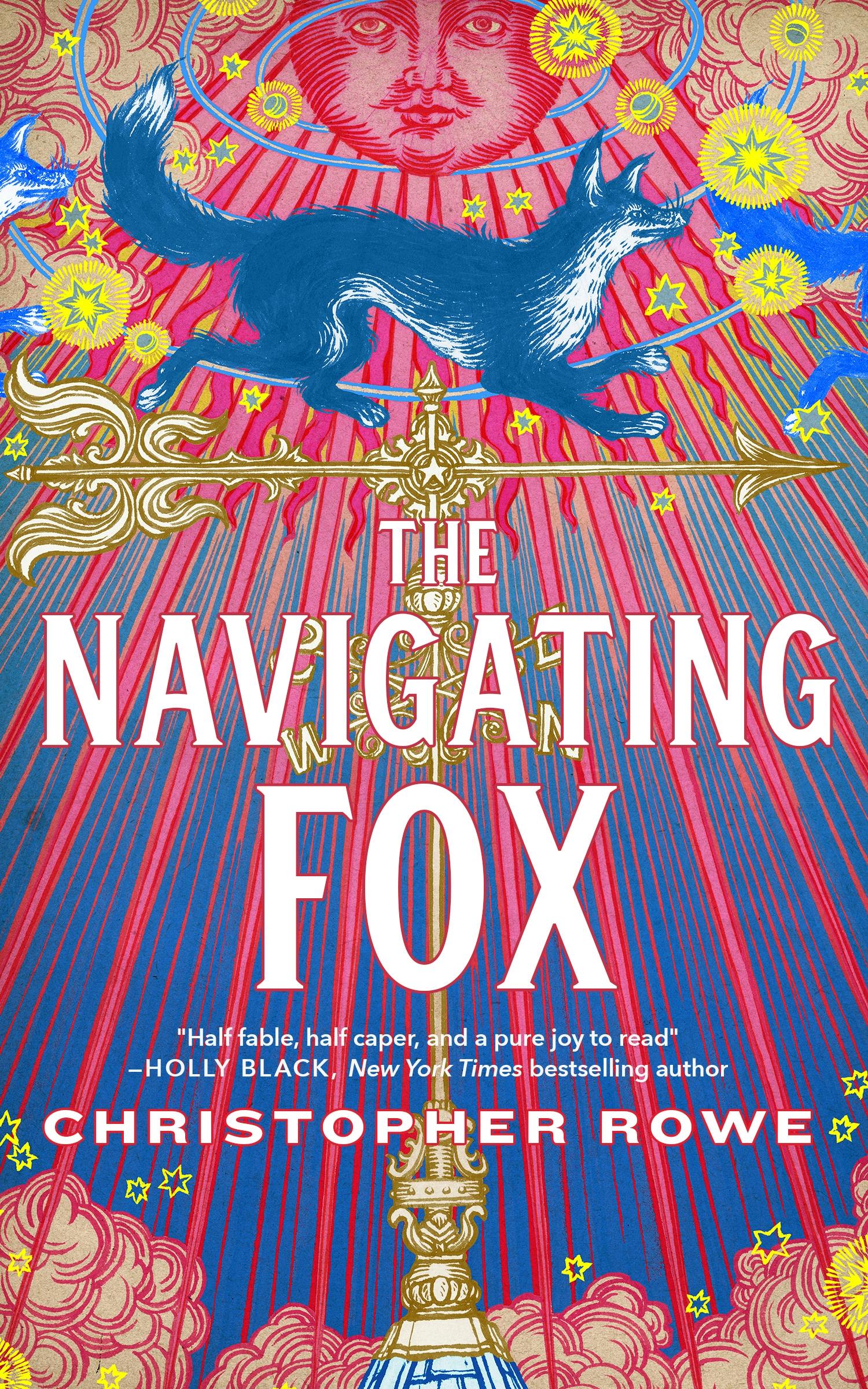
In the Empire, both in its home territories, centered on the Eternal City, and in its far-flung colonies, such as Aquacolonia, the port city across wide Oceanus on the continent to the west, some animals are Knowledgeable—meaning they can speak as humans do—and some are not.

Quintus Shu’al is a Knowledgeable fox. In fact, he is the only Knowledgeable fox. Knowledgeable animals are made, not born, and Quintus was awakened on the Silver Roads, special routes like ley lines that allow for non-Euclidean travel and which he has a unique gift for navigating.

Quintus wants nothing more than to know his origin story. The high priest of the God of the Hinge, Scipio Aemilanus, purports to have answers that he’ll supply if Quintus does his bidding. So far Quintus has, and the result was the loss of an entire expedition that Quintus had been leading along the Silver Roads to the gates of Hell. And now Scipio Aemilanus has managed to manipulate Quintus into leading a second expedition to Hell. Only this time Scipio Aemilanus is coming along. So too is the grief-stricken and angry Octavia Delfina, whose sister Cynthia was the head of the last expedition. And so is Walks Along Woman, a bison ambassador from the Great Northern Membership, a polity on this continent.

That’s the set-up for The Navigating Fox--it’s a *lot* of information, and although it takes several chapters to get there, it’s not slow and relaxed; it’s fast and full. That could be a detraction, but for me it had a rich-strangeness that was absorbing (Zootopia-like explanations for how things are set up to accommodate Knowledgeable animals of different sizes, for example), so it was a feature, not a bug.

From here on, a double story unfolds: the story of the first journey—the one where all the explorers were lost—and the second one. By the time Quintus reaches Hell for the second time, the truth about what happened to the first expedition has been revealed and people’s hidden motives have been made clear.

But the real interest, for me, was not in those plot happenings, but in the conversations people have on the journeys, how Quintus’s (and others’) expectations and views of reality are contradicted, or maybe it would be better to say, exposed and viewed from completely other angles.

Here’s one about time, from the first journey:
“How are things going down there?” Cynthia asked him.

“I do not know,” he said.

“Which side is winning?” I asked him.

“I do not know that, either, for sure,” he said. “Probably not yours, though.”

“I don’t have a side,” I said.


Blue shot a curious look at Cynthia Benedictus. “How long have you known this fox?” he asked.

“I can’t say I know him at all,” she said. “I hired him about two months ago.”

“I like that word,” Blue said. “Month. I like counting time like you do.”

I think my favorites, though, were the ones about the nature of Knowledgeable animals. I love, love, love that the story raised this question, turned it around it its hands, held it up to the sun and saw how it caught the light:a number of quotes! they are all so good... )

I think you can enjoy The Navigating Fox for many things, but I do think if you go in expecting something definitive about Hell or even about Quintus’s origins, you will end up disoriented. I think that’s part of the point. Scipio tells Quintus at one point that Quintus has been asking the wrong question. I think this story is about the possibility of other questions. The story is making other observations.

One final, beautiful quote, from when the party’s raccoon cartographers have made a portrait of a voiceless bison named Fondness:
“What do you have there, mapmakers?” asked Walks Along Woman.

Loci held up the sheet. It was a likeness of Fondness. It was one of the most beautiful drawings I had ever seen.

“She does not interpret images the way you do,” Walks Along Woman said gently.

“We know this,” the twins said, speaking atop one another. Their manner was an echo of the gnomic pronouncements of the Membership.

“Then why did you show it to her?” I asked, genuinely curious.

“Because we do not convey images the way you do,” said Loci.
Or Foci. Their scents were obscured by the mass of creatures around us.
asakiyume: (Em reading)
I bought issue 296 of Interzone magazine because I wanted to read "999 Swords" by Marie Brennan, a Yoshitsune-and-Benkei story, and wow, wow, wow, it completely rewarded all my hopes and expectations. Benkei's narration of his childhood is very funny:
“I explained to [the monk] that I needed charity, since not only had my parents abandoned me but so had the monks of Hieizan. Therefore, he ought to give me his robes. To my great astonishment, he refused! I ask you – what kind of Buddhist doesn’t simply hand over his clothing to the first stranger who wants it? I reminded him about the story of Satta Ōji, who virtuously sacrificed himself to feed a hungry tiger, and of Shibi Daiō, who gave up some of his own flesh to keep a dove from being eaten by a hawk. He had the cheek to ask me if I thought I was a tiger or a hawk!

“At that, I knew there was only one thing for me to do. As I was now a newly minted monk, I ought to teach Shunkai to be a better and more generous Buddhist. It wasn’t hard, since I was a lot bigger than he was. I had sworn not to steal, though, so after I took his robes, I gave him my own in return. They didn’t fit him very well, and it was a little silly to see an old man like him dressed as an acolyte, but I figured that would just teach him humility.”

Super job. And then, having bought the anthology-sized zine, I tried another story whose title intrigued me, "Our Lady of the Void," by Hesper Leveret, the story of an ethnologist who's off on her first-ever trip off Earth--and into deep space!--to research the flowering, among the crews of interstellar freighters, of a new folk faith in the titular Our Lady of the Void. Delightfully, little black cats (void cats, of course) are associated with her, although if the wrong person sees a ship's void cat at the wrong time, it's bad luck. The details of a folk religion are wonderfully brought to life, and the details of the story weave together most cunningly. I especially like the blessing: "May Our Lady see you in the void."

The other truly great short story I read, which ought to be of interest to most of my friends here, is Iona Datt Sharma's Penhallow Amid Passing Things, a tale of the coast of Cornwall involving a smuggler, a revenue agent, the ebb of magic from Britain's shores, and a dangerous magical bundle. Oh, and a budding Sapphic romance between the smuggler and the agent, both of whom prompted "Do I want to be her or be with her" feelings. ... Laurels go to the revenue agent, though. My heart. The writing is gorgeous--evocative, sharp, and funny:
Smuggling in these parts is a hanging offence, but it’s taking a while for the gravity of Jackie’s situation to descend upon him. His affable face strains from the effort of exerting his intelligence ....

“There are naval men of many years’ service,” Trevelyan remarks, without greeting, “who might expound to you all day long of the great accuracy of their timepieces, and never think to change from London time.”

And if you want to know about that romance....
Without realising it until now, she’s been staring all this time at Trevelyan’s delicate, lovely hands, cupped around roses of flame.

Apparently the story was included in the anthology of underwater ballroom stories that I remember coming out some years ago. I remember that anthology had a stellar list of contributors, and if the other stories are even within shooting range of the caliber of this one, that must have been one hell of an anthology! Now, though, the story is available as a stand-alone.

Beautiful covers on both Interzone Issue 296 and Penhallow Amid Passing Things:


Other reading:
I'm also reading Betsy-Tacy, which is as charming and appealing as [personal profile] osprey_archer's review made it sound, and I continue with Samantha Nock's poetry collection, A Family of Dreamers, with each poem offering gifts.
asakiyume: (Em reading)
I've been daunted by the idea of trying to do justice to Aster Glenn Gray's The Sleeping Soldier here on Dreamwidth. Somehow I did manage, finally, to say a few things on Goodreads, but when I think about writing a DW post, I think about saying more, or making it more personal, or something. And then I wilt. And that's a shame, because I love this book. All of AGG's books are fun, thoughtful tales, but this one really nails a central theme of hers, which is what friendship means or has meant for people at different points in time, and what romantic love means, and what sexual attraction is and how that fits in.

The scenario is that Russell, a young Civil War soldier, was cursed, Sleeping Beauty style, by a fairy, and has now awakened 100 years in his future, in 1965, where he's guided through his new life by Caleb, a miserably closeted gay college student. The story has plenty of the fun you'd expect from that setup, as Russell encounters the wonders of life in 1965--and also enlightens the college crowd about which things were, in fact, present in 1865 ("I know what ketchup is," he says haughtily at one point). But it also probes the grief and loss that would go with waking up 100 years in the future, and touches on how we understand history--or don't:
Caleb nodded. "It's hard for people to let go of their preconceived notions [about the past]."

"They don't really want my opinion on anything," Russell griped. "They just want to draft the whole nineteenth century into supporting what they think. As if we all agreed with each other! We had this whole Civil War, you might could remember."

And then there's that theme of friendship and romantic love, and what's appropriate to express and what's considered by society to be deviant at any given time. I knew some of this, but not much, and very little about how same-sex attraction has been understood. In fact, what little I know is mainly thanks to AGG's earlier stories. I'm humbled to say that her writing in this book made me understand the situation of a gay friend of mine (Caleb's contemporary) in new ways. On that note, I really love the character Michael in this story. What a good and patient friend.

I came across this in someone's Goodreads review of the book:
I felt sad because I honestly never knew how it was in the past (men being open with their affection to each other).

And this, from an Amazon reviewer:
I came out in my teens, in the Midwest in the mid-70s, and the novel captures that sense of isolation and self-discovery: reading The Charioteer, Giovanni’s Room etc. anything with gay characters while feeling like you’re the only gay person in the world and trying to figure out how you’ll make a life. I never would have expected this book to capture the profundity and comedy of this forgotten world so well.

Those comments say so eloquently what's important and special about this book.

... But past-meets-nearer-past moments were also great, honestly. I enjoyed the explanations of things like hot dogs ("Hot dogs are... um. A kind of sausage") and Russell's encounters with items such as escalators a whole lot too.
asakiyume: (Em reading)
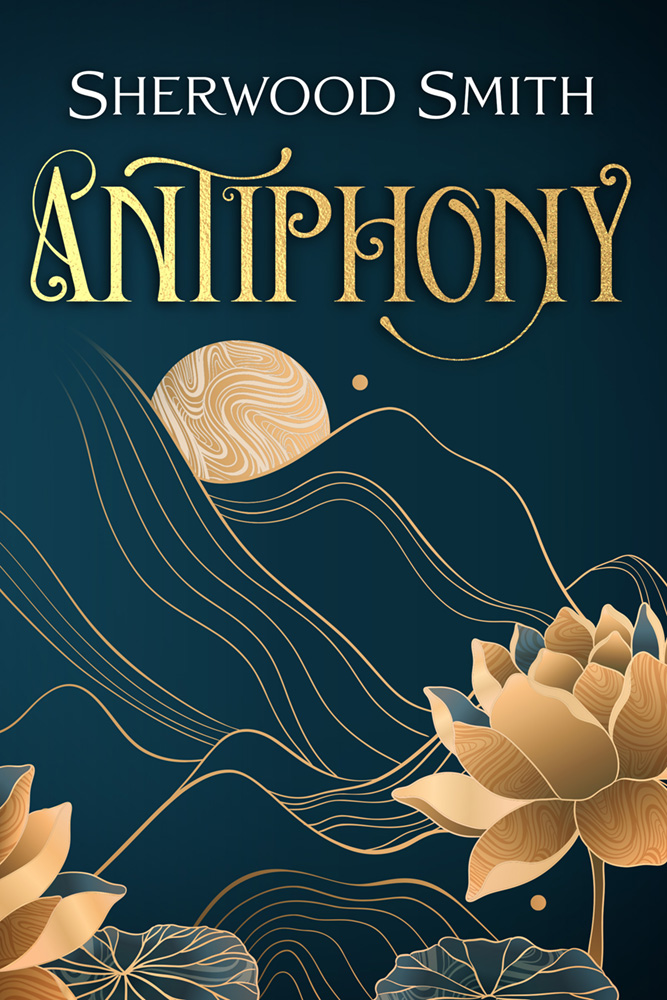
Probably most people who read my journal also read [personal profile] sartorias, but for those who don't, or who missed it, Antiphony, the culmination of her stories set on Sartorias-deles, is out now.

This is a wonderful one, full of people finding each other, healing and growing, and getting themselves in a good place for the next great adventure, whatever that might be. It's an absorbing delight to read. You see Carl (a woman; her actual name is Mersedes Carinna), a nervous, conscientious shadow cast by a domineering mother, gradually grow into a confident person who turns an obsessive crush into ... something else. Jilo, now king of the Chwahir, also continues to grow in confidence, and it's wonderful to see Chwahirsland transforming, unfolding and blooming. Lyren, the headstrong, self-centered daughter of Liere, grows a LOT, and finds a place, a purpose, and a partner. Several of Detlev's boys also pair off, and others we see happily engaged in worthy work. Imry's storyline resolves nicely. And I can say all this and it isn't even spoilers, because the fun of the book is in how all this happens.

Probably it would be hard to pick up this book if you aren't somewhat invested in at least some of the characters--though I do believe you could read Carl's story (and then by extension, develop an interest in seeing what will happen with Lyren) even with no prior knowledge. I most certainly recommend Antiphony wholeheartedly for those of you with familiarity with the modern era of Sartorias-deles (the era of Senrid, Clair, Liere, Siamis, etc.). You can purchase it at all the usual places, and also through Book View Cafe.

asakiyume: (squirrel eye star)
Joshua Barkman draws four-panel comics under the name False Knees--you've probably seen his images used in memes (like this one).

Some time ago he put a comic called Spores up on social media--it's a really lovely story of what happens when a meteorite crashes to Earth in the northern woods in winter...


And extraterrestrial fungi spread....


And creatures eat them.


It leads to creatures being able to communicate across species, and -- well, it's a really great story. And now you can order it at the creator's website. I got one for myself and one to send to a family member.

asakiyume: (Em reading)
On Saturday, Steven Brewer, author of the Revin's Heart series of steampunk novellas that I've enjoyed, had a tent set up at the farmers market the next town over, to sell the novellas and also some of his writing in Esperanto.

I went to see him and took a 10-second video. (Warning, those Youtube shorts play on repeat--click away, click away, or else you will be stuck in a time loop!) Afterward, while we were talking, a haggard man, older than either of us (I reckon, but who can be sure?) came by and surveyed Steven's wares.

"Would you like to read a pirate airship adventure story?" asked Steven.

"I only read one person," the man said in a hoarse voice. "And that's Scott Ritter." And then he stalked off.

Steven and I exchanged glances. Well then!

"I usually try to entice people with 'Would you like to be an airship pirate,' and most people respond positively," he said. "There was one little kid, though, who told me, 'I only like Sonic. I'm wearing his shoes!'" Steven takes it all in stride.

Elsewhere in the farmers market I saw a kid with a Sonic T-shirt on and wondered if that was the same kid. I didn't get a glimpse of his shoes, though.

Revin's Heart at the publisher's website

Profile

asakiyume: created by the ninja girl (Default)
asakiyume

May 2026

S M T W T F S
     12
3456 789
10111213141516
17181920212223
24252627282930
31      

Syndicate

RSS Atom

Most Popular Tags

Style Credit

Expand Cut Tags

No cut tags
Page generated May. 16th, 2026 01:00 pm
Powered by Dreamwidth Studios